
We had quite an adventure here in Port Elizabeth, South Africa.
A major storm hit our coast with relentless rain and strong winds. By day two, the municipal electricity failed after power poles were blown over.
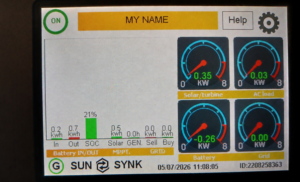
We have solar power, but by the time the grid went down our batteries were already sitting at only 40%.
Immediately, we switched off everything non-essential:
the fridge, TV, unnecessary lights — everything.
We kept only:
- the router,
- cellphone chargers,
- one lamp,
- and my husband’s electric chair that lifts him to a standing position.
Without that chair, getting up becomes extremely difficult. If it stopped in the wrong position, I would not physically be strong enough to lift him.
By bedtime, the battery had already dropped to 34%, so we switched off the router too.
The next morning: 24%.
If the battery drops to 20%, the whole system shuts down and only comes back online once it reaches 40% again or municipal power returns. In both cases it could take hours or even days.
By then the internet towers had also gone down.
The weather stayed overcast, so the solar panels only managed to charge the batteries to 37% during the day. The following morning they were back down to 21%.
Luckily, some sunshine finally broke through the clouds. We charged enough power to briefly run the freezer and keep the food frozen.
At that point, I realised something important.
When life is not going the way we want, we usually have two choices:
Option A:
Have no electricity and no internet — and be miserable.
Option B:
Have no electricity and no internet — and still be okay.
I chose the second option.
Instead of asking,
“Why is this happening to me?”
I asked:
“How is this happening for me?”
Since there was little electricity and no internet, I finally had time to do something I rarely do:
sit still and read.
I started reading a friend’s book. Sitting quietly with a physical book is not my natural strength — I normally prefer audiobooks because I like moving while learning — but suddenly life had removed all the usual distractions.
So I read.
Slowly.
With many breaks in between.
And something about the stillness felt good.
That evening my husband and I went to bed early. In the middle of the night we woke up and had one of those deep conversations that only happen when the noise of life disappears.
We spoke about perception.
How we can choose to see ourselves and the world in two very different ways:
Option A:
Flawed.
Option B:
Exactly as we are meant to be.
Not perfect in the way the world defines perfection —
but part of a bigger perfection we do not always understand immediately.
Suffering comes from resisting reality instead of meeting it.
Then the rain stopped.
Our city had received almost 200mm of rain in only three days. The dams supplying Port Elizabeth went from around 40% capacity to overflowing in less than 48 hours.
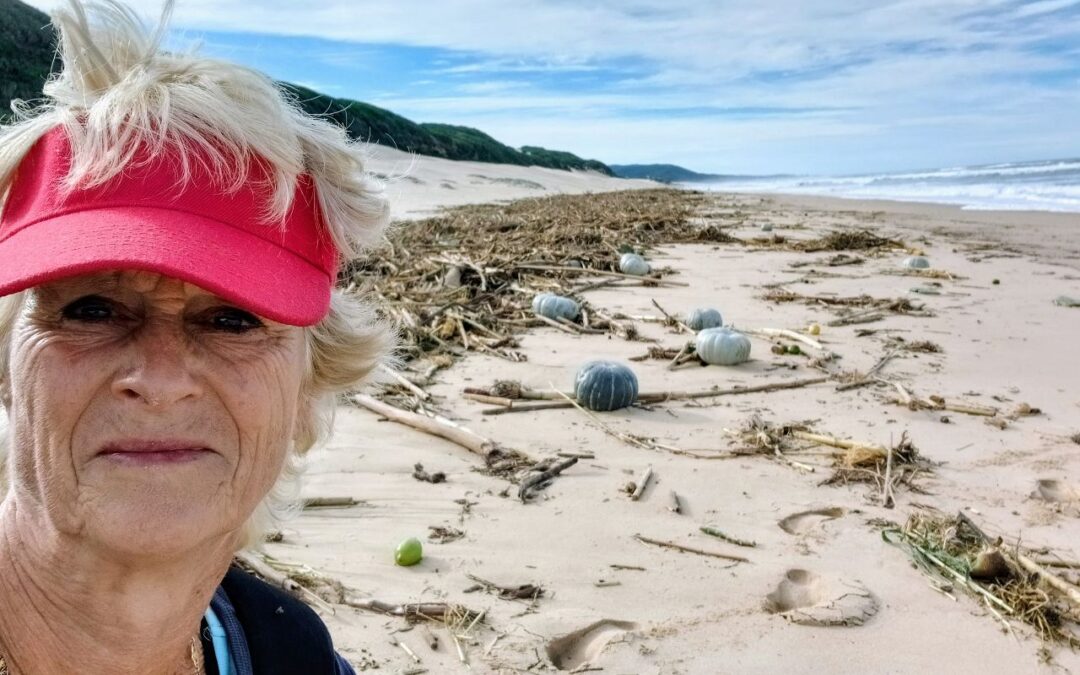
With no internet and limited electricity, I decided to take the dog for a walk on the beach.
And what I found was surreal.
Flooded rivers had washed crops from nearby farms into the ocean. The beaches were covered with thousands of pumpkins, lemons, and other produce.
It looked almost unreal.
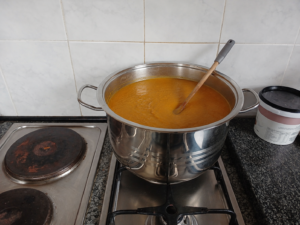
I picked up some of the pumpkins and brought them home so they would not go to waste. I made a massive pot of pumpkin soup that will probably feed us for days.
Was it a disaster?
Or was it an adventure?
For the farmers who lost crops, it was undoubtedly painful.
But I cannot improve their situation by becoming miserable too.
What I can do is choose how I meet life.
That same realisation has shaped how I approach my business too.
I want to grow my work, but I have realised I do not enjoy spending hours creating social media content for platforms that drain me.
What I do enjoy is writing.
Making videos.
Sharing meaningful conversations.
Exploring deeper ideas.
That feels lighter.
And I have started learning that forcing ourselves into ways of living that exhaust us often creates unnecessary suffering.
When we stop fighting ourselves, we can start building from our strengths instead.
The journey becomes lighter.
More natural.
More enjoyable.
Maybe creating “The Life You Want” starts there:
not by controlling everything around us,
but by changing the way we see what is happening.
Disaster or adventure.
Sometimes the difference is perception.
If you want to explore this idea more deeply, my book Bitter or Better – I Decide explores how our perceptions and choices shape the way we experience life — even during difficult seasons.
You can read more or download the first chapters here:
Bitter or Better – I Decide