
This Is the Conclusion I Have Reached
Why do bad things happen to good people?
It is a question people have asked for centuries. I do not pretend to have one answer that explains every painful event. However, after more than 30 years of working with people, I have noticed a pattern that may offer part of the answer.
Why do bad things happen to good people? I believe the answer often lies in the beliefs we hold about ourselves, our self-worth, and the way those beliefs shape the choices we make and the relationships we build.
I used to say:
People treat us the way we treat ourselves.
Today, I would express it differently.
After my own experiences and more than 30 years of working with others, I have come to this conclusion:
Our world is a reflection of the beliefs we hold about ourselves and life.
This, I believe, explains why bad things happen to good people more often than we realise. Let me illustrate.
When we think of a “good person,” we often picture someone who is kind, generous, caring and always ready to do something for others.
Yet there can be two very different reasons for behaving this way.
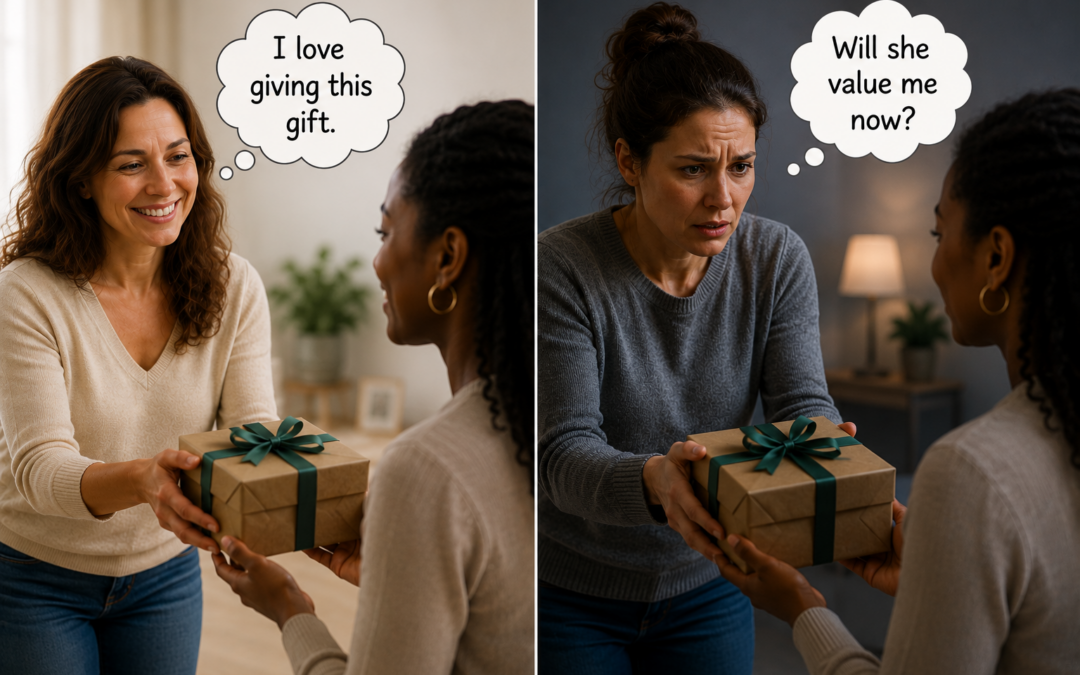
Some people are kind because they recognise their own value. They give freely without abandoning themselves.
Others are kind because they are attempting to earn love, appreciation or acceptance. Deep inside, they do not believe they are valuable.
Outwardly, the behaviour may look the same.
Internally, it is driven by very different beliefs.
Are We Expressing Our Worth or Attempting to Earn It?
Many of our beliefs about ourselves begin in childhood.
Perhaps another child received more attention.
Perhaps we felt unwanted, criticised or like a burden.
Perhaps a parent was overwhelmed and unable to give us the love or recognition we longed for.
As children, we don’t have the ability to conclude:
“My parents cannot recognise my value because they are struggling.”
Instead, we often conclude:
“There must be something wrong with me.”
We may begin believing that we are not important, that others matter more than we do, or that we must be useful to deserve love.
We do not consciously choose these beliefs. Instead, they quietly shape the way we live. Over time, we may become someone who:
- Always says yes.
- Gives more than is comfortable.
- Avoids conflict.
- Puts everyone else’s needs before our own.
We may begin believing that we are not important, that others matter more than we do, or that we must be useful to deserve love.
We do not consciously choose these beliefs. We simply start living from them.
We become the person who always says yes, gives more than is comfortable, avoids conflict and puts everyone else’s needs before our own.
People may describe us as generous and selfless.
Yet underneath our goodness is a quiet question:
“Have I done enough to deserve love?”
There is a difference between doing good because we know our worth and doing good because we are attempting to prove it.
If you’d like to understand how these early experiences shape the way we speak to ourselves, you may also enjoy my article Why Are We So Hard on Ourselves?
Why Do Good People Keep Getting Hurt?
When we do not recognise our own value, we often do not expect others to recognise it either.
We may overlook small acts of disrespect, excuse hurtful behaviour, remain silent or ignore our intuition because we do not want to upset anyone.
Over time, what began as a small act of disrespect can become a pattern. The other person learns what we will tolerate, while we gradually learn to tolerate more.
This does not mean another person’s behaviour is our fault. Every adult remains responsible for their own choices.
It means our beliefs can influence what we accept, how quickly we speak up and whether we remain in relationships that repeatedly diminish us.
People with low self-worth often become people pleasers because saying no feels uncomfortable and disappointing others feels even worse. Over time, they may ignore their own needs in the hope of earning acceptance, appreciation or love.
A Difficult Conversation With a Client
A client once became upset after I said, “People treat us the way we treat ourselves.” She thought I was suggesting that she had caused her own rape.
That was not what I meant. The man who assaulted her was entirely responsible for his actions.
As we continued talking, she realised that she had grown up feeling that her mother did not recognise her value. She had accepted the belief that she was unimportant and became very caring and useful to others in an attempt to earn the value she did not feel inside herself.
Looking back, she recognised that she had ignored the warning signs, including the uncomfortable feeling she had around this man. He had also crossed smaller boundaries before the assault. At the time, she found it difficult to stand up for herself and say, “This is not acceptable.”
She realised this was not about blame. She could now understand the dynamics within that relationship.
Understanding the patterns that can make us more vulnerable to abuse or exploitation is not the same as blaming ourselves for another person’s choices.
This understanding allowed her to make peace with part of her past. She now realises that developing self-respect is essential to changing her future.
My client’s story illustrates how low self-worth can influence our relationships without making us responsible for another person’s behaviour.
This mirrors another principle I explore in my article Illegal Immigration, Fear, and the Choice We All Face, where I explain how our inner beliefs shape the way we interpret and respond to the world around us..
Where Does Our Power Lie?
We cannot change what another person chose to do in the past.
But we can change the beliefs we carry forward.
As we begin recognising our own value, we speak up earlier, trust our intuition, stop apologising for taking up space and become more willing to say no.
Sometimes the people around us begin treating us differently. Sometimes unhealthy relationships end. Either way, the old pattern becomes harder to continue.
- We were valuable before we ever achieved anything.
- We were valuable before we pleased anyone.
- We were valuable before we proved anything.
As I often say:
“We are valuable, just because.”
Our kindness does not create our worth.
Our usefulness does not create our value.
Another person’s approval does not create our worth.
We already have it.
When we stop attempting to earn our worth and start recognising that we already have it, our self-worth grows, our self-respect grows, and our relationships begin to reflect that change.
Recognising this is not an invitation to blame ourselves.
It is an invitation to reclaim our power.
Continue the Journey
Discover how forgiveness, self-respect and inner peace can transform the way you experience life.
Bitter or Better, I Decide
If this article resonated with you, you’ll find these ideas explored in much greater depth in Bitter or Better, I Decide. The book expands on how forgiveness, self-worth and self-respect influence every area of our lives and offers practical ways to create lasting change.You can download the first two chapters for free.