
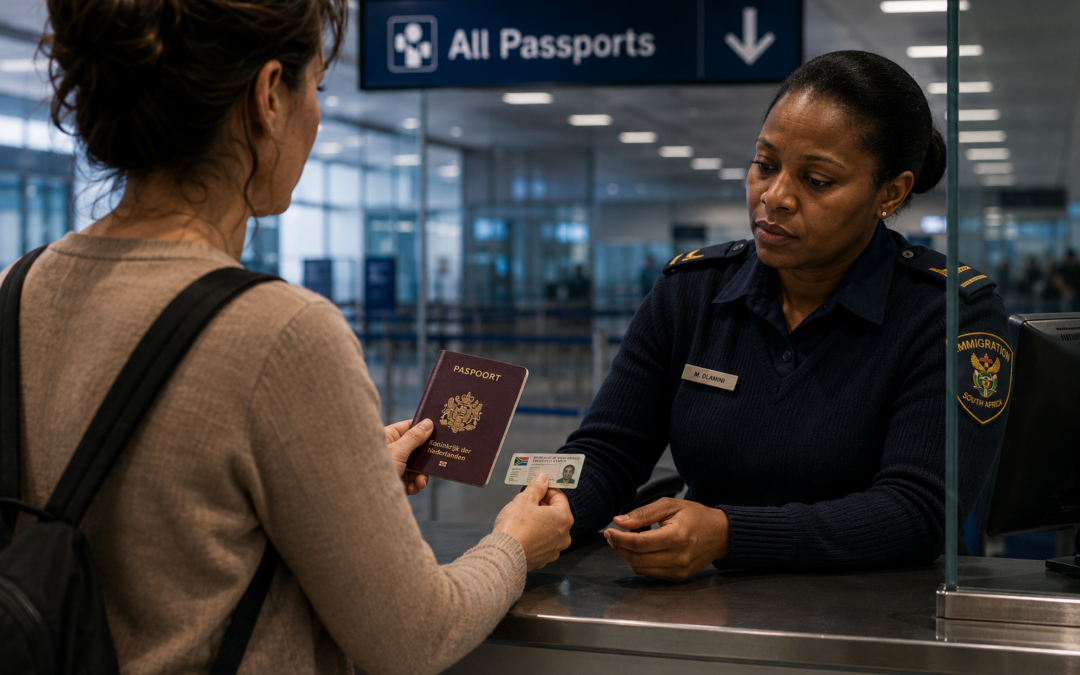
I noticed the change in the atmosphere the moment I arrived back in South Africa last week.
Across the country there have been marches against illegal immigration. Immigration has become one of the most talked-about and emotionally charged topics in South Africa.
That tension followed me all the way to passport control at O.R. Tambo International Airport.
I handed the immigration officer my Dutch passport together with my South African ID, something I have done countless times before.
“Where is your residence permit?” she asked.
I hadn’t been asked that question in more than ten years.
Fortunately, I always carry a copy whenever I travel overseas. I wipped it out, she studied it for a moment, and then waved me through.
As I walked away, I couldn’t help wondering what might have happened if I hadn’t had it with me.
It was a small reminder that immigration has become a deeply emotional topic.
South Africans are frustrated. Many feel illegal immigration places additional pressure on jobs, housing, healthcare and other public resources. Similar conversations are taking place in many Western countries as well. Governments are wrestling with difficult questions, and communities are feeling the strain.
These practical problems deserve practical solutions.
But they also raise another question.
What is happening inside us while we face them?
It is easy to believe that if we remove the people we blame for our problems, life will finally become peaceful.
Sometimes practical circumstances do improve when problems are addressed. Yet our inner world doesn’t automatically change.
If our hearts remain filled with anger, resentment or fear, those emotions simply look for another target. We move from blaming one group of people to another. The names change, but the emotional pattern remains the same.
Over the years I have learnt that our experience of life is shaped not only by what happens around us, but also by what happens within us.
Fear (including anger) narrows our thinking.
Love expands it.
Every situation places us at a crossroads.
Which road will we choose?
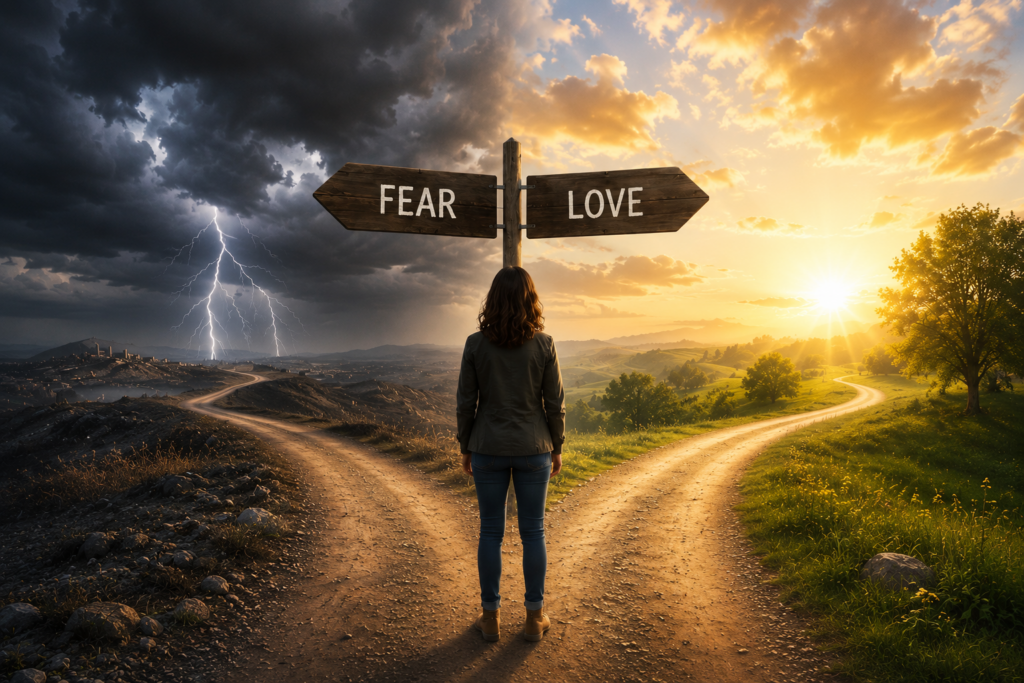
Every challenge presents us with a choice. Fear narrows our thinking. Love opens the way to wisdom, compassion, and lasting solutions.
Love looks for solutions that preserve both truth and dignity.
This doesn’t mean ignoring crime, unemployment or broken systems. Nor does it mean pretending that difficult conversations don’t exist.
It means refusing to let fear become the force that directs our responses.
That shift begins with understanding why certain situations trigger such strong emotions in us. It continues with taking responsibility for our own thoughts, beliefs and reactions. And it often involves one of the hardest, yet most freeing, choices we can make:
Forgiveness.
Not because what happened was acceptable.
Not because we stop caring about justice.
But because we refuse to allow bitterness and resentment to determine who we become.
That is why I am presenting a Forgiveness Workshop on 18 July.
I chose that date intentionally because it is Nelson Mandela’s birthday. Whatever our political views, few people demonstrated more clearly that forgiveness and reconciliation can transform lives.
We may not change a nation overnight.
But each of us can choose whether fear or love shapes our next conversation, our next decision and our next response.
And perhaps that is where lasting change begins.
Use the button below for more information and to book your place.